We Use CookiesWe use cookies to enhance the security, performance, functionality and for analytical and promotional activities. By continuing to browse this site you are agreeing to our privacy policy

10 Best Stereo Amplifiers 2026 in the United States

#1

Winner

10.0 score

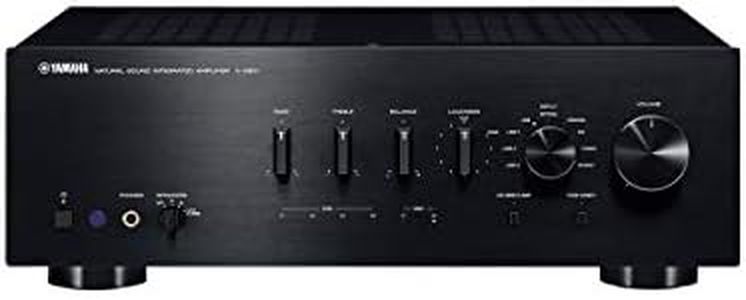
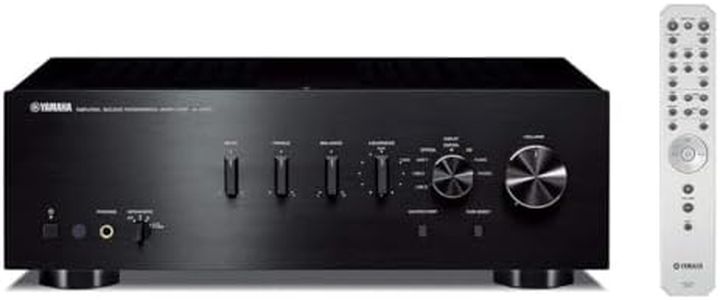
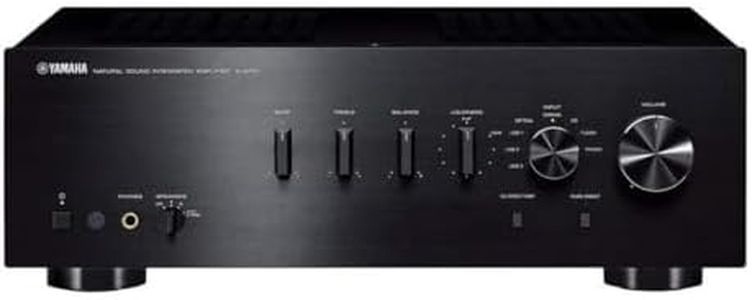
Yamaha Audio A-S3200SL Integrated Amplifier (Silver)
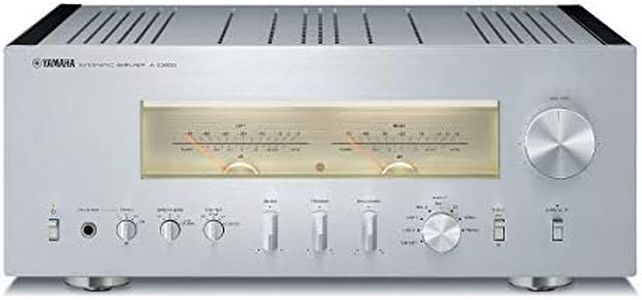
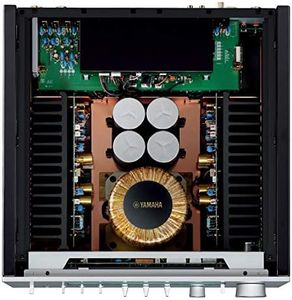
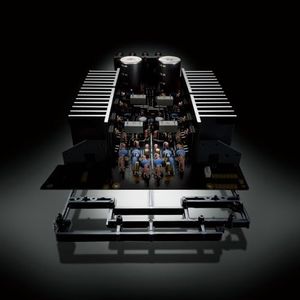
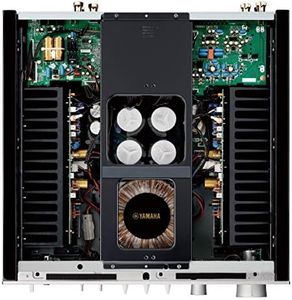
The Yamaha Audio A-S3200SL is a high-quality integrated stereo amplifier designed for users who value rich, authentic sound. It delivers a strong power output of 150 watts, which is ample for driving a range of speakers and filling medium to large rooms with clear audio. Yamaha's use of fully balanced circuitry helps reduce background noise and improve channel separation, meaning you get cleaner sound with less distortion. The amplifier features a large toroidal transformer and high-quality capacitors, contributing to its musical and natural sound profile.

Rating
10.0
Chosen by1,209
Power Output
Impedance
Connectivity Options

Most important from
6 reviews

Power Output
Delivers superb clarity and a smooth, rich sound with a beautifully balanced bass, midrange, treble, and vocals that create a lifelike and holographic soundstage.
Impedance
The amplifier runs hot when driving low-impedance loads, suggesting careful speaker matching is important for optimal performance and safety.
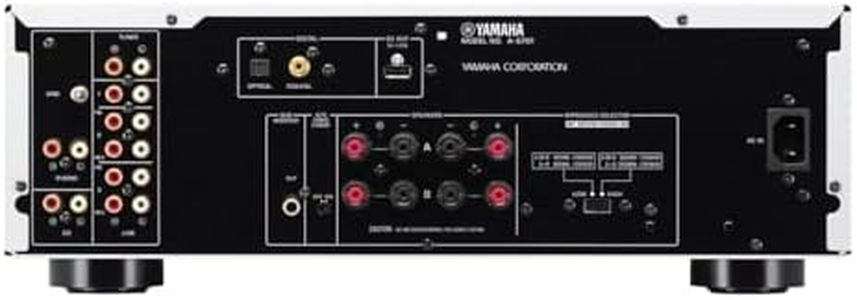
Connectivity Options
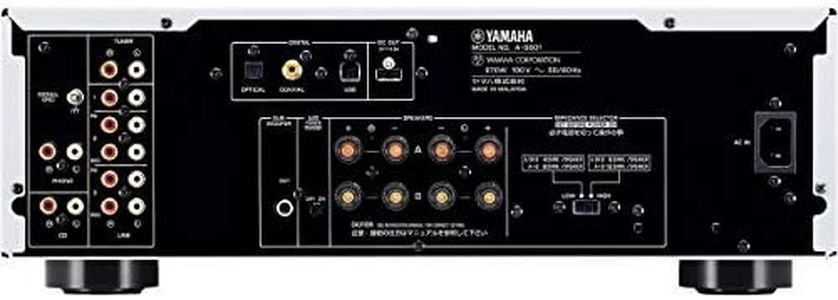
Connecting an active subwoofer via the pre-out significantly enhances the depth and fullness of the sound experience.
Size and Design
Stunning design featuring elegant level meters that add a classic, stylish touch to the amplifier’s visual presence.
#2
9.4 score

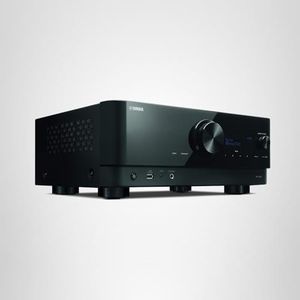
Yamaha R-N800A Network Receiver with Phono and Built-in DAC, Silver

The Yamaha R-N800A Network Receiver is a solid choice for those seeking to enhance their audio experience, especially if you enjoy streaming music or listening to vinyl records. One of its standout features is the ESS SABRE ES9080Q DAC, which offers exceptional signal-to-noise performance, ensuring that your music sounds clear and detailed. The built-in YPAO-R.S.C. and precision EQ capabilities allow for fine-tuning your listening environment, making it versatile for different spaces.

Rating
9.4
Inputs and Outputs
Size and Design
Additional Features

Most important from
111 reviews

Inputs and Outputs
This is a top choice for an all-in-one streaming amplifier with consistent sound quality across all inputs.
Size and Design
Aesthetically pleasing with a simple layout, it integrates traditional receiver functions with modern streaming services, simplifying setups.
Additional Features
The Yamaha application is more stable and user-friendly compared to its competitors, enhancing the overall experience.
#3
8.8 score

Denon AVR-X2800H 7.2 Ch Stereo Receiver - 8K UHD Home Theater AVR (95W X 7), Wireless Streaming via Built-in HEOS, Wi-Fi, Dolby Atmos, DTS Neural:X & DTS:X Surround Sound, Bluetooth Amplifier

The Denon AVR-X2800H is a solid choice if you’re looking to build a flexible and immersive home theater system. It delivers 95 watts per channel across 7.2 channels, which is enough power for most medium-sized rooms and can drive a variety of speakers comfortably. Denon typically supports common speaker impedances around 6-8 ohms. The receiver excels with its surround sound capabilities, including Dolby Atmos and DTS:X support, which create a rich 3D audio experience either with or without dedicated height speakers.

Rating
8.8
Connectivity Options
Power Output
Size and Design

Most important from
1076 reviews

Connectivity Options
HDMI 2.1 support on all inputs with full HDR10+ compatibility ensures seamless connection with the latest video sources.
Power Output
Sound quality is superb, driving both music and movies with clarity and power that satisfies demanding home theater setups.
Size and Design
The receiver balances power and size well, fitting comfortably into most entertainment centers without sacrificing performance.

Top 10 Best Stereo Amplifiers 2026 in the United States
#1

Winner

10.0  score

Yamaha Audio A-S3200SL Integrated Amplifier (Silver)
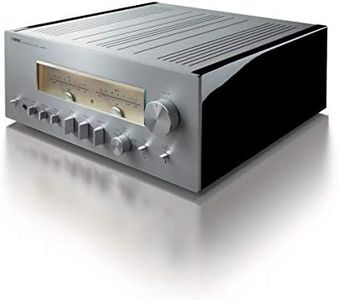
Power Output: 150 Watts
Connectivity Options: 3.5mm jack, RCA, Ethernet
Size and Design: 23.8x23.5x12 in; 65.4 lbs; Mechanical Ground

Chosen by 1209 this week

Yamaha R-N800A Network Receiver with Phono and Built-in DAC, Silver

Signal-to-Noise Ratio (SNR): ESS SABRE ES9080Q DAC
Inputs and Outputs: 3.5mm Jack, 3 HDMI, Phono, USB
Size and Design: 15.5 x 17.13 x 6 inches
Additional Features: Multiroom, Equalizer, Bluetooth, Wi-Fi

Bose Music Amplifier – Speaker amp with Bluetooth & Wi-Fi connectivity

Power Output (Watts per Channel: 125 watts
Inputs and Outputs: Bluetooth, Wi-Fi
Size and Design: 8.3 x 8.3 x 2.6 inches
Additional Features: Spotify integration, App control

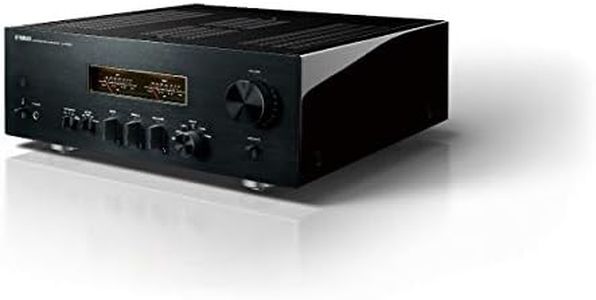
Yamaha Audio A-S1200BL Integrated Amplifier (Black)
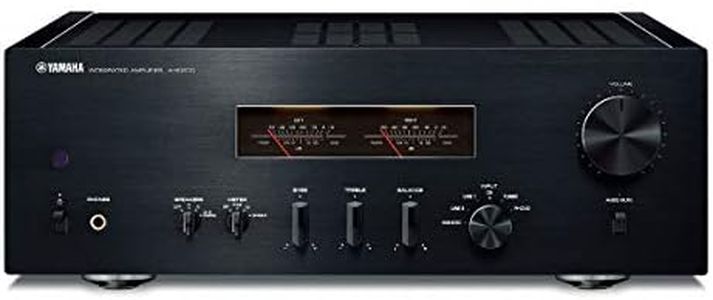
Inputs and Outputs: several inputs and outputs
Size and Design: 23.5 x 23 x 10 inches
Additional Features: high-quality components, toroidal transformer

YAMAHA A-S801SL Natural Sound Integrated Stereo Amplifier (Silver)

Power Output: 100 watts per channel
Total Harmonic Distortion (THD): 0.019%
Connectivity Options: coaxial, optical, USB DAC, analog inputs
Size and Design: 15x17x6 inches, silver finish

Sony STRDH190 2-ch Home Stereo Receiver with Phono Inputs & Bluetooth Black

Power Output (Watts per Channel): 100 watts
Impedance: 6–16 ohms
Total Harmonic Distortion (THD): low
Signal-to-Noise Ratio (SNR): high
Inputs and Outputs: phono input, four stereo RCA inputs
Size and Design: 11 x 17 x 5.2 inches
Additional Features: Bluetooth, A/B switching, built-in FM radio

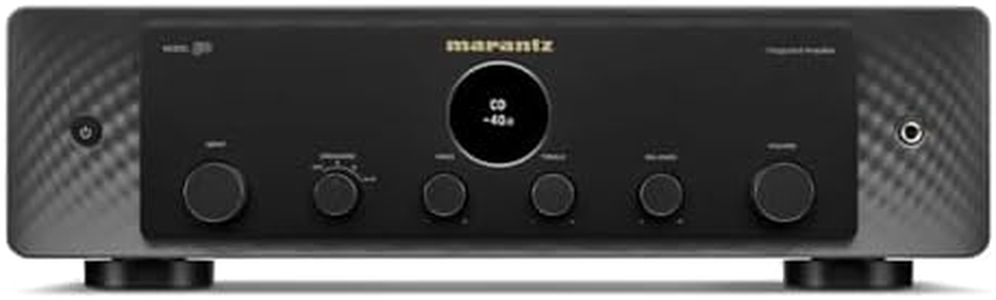
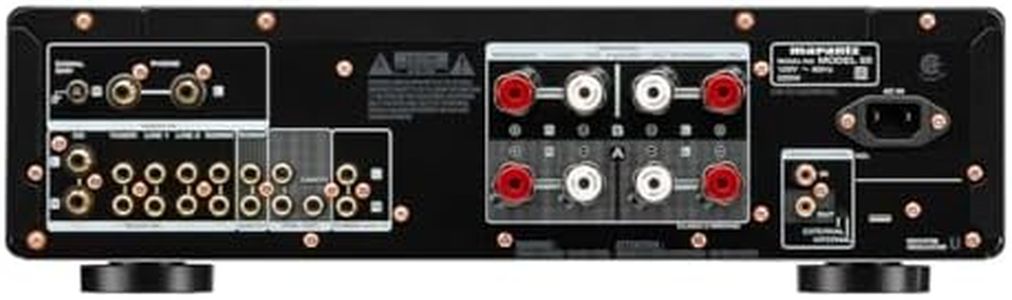
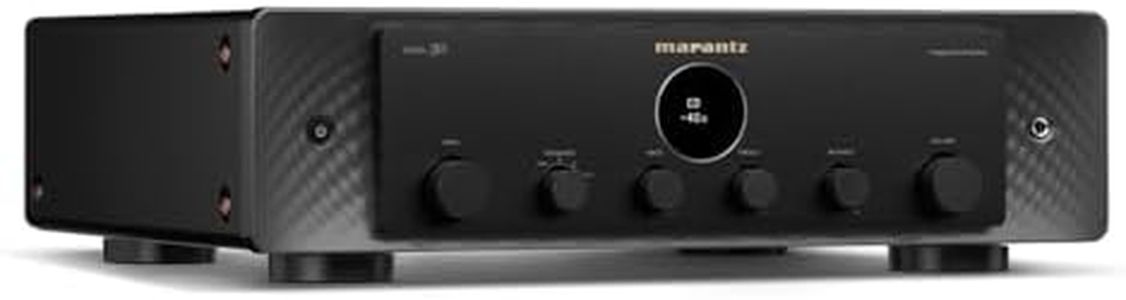
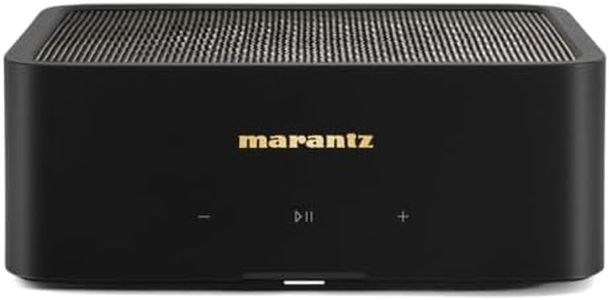
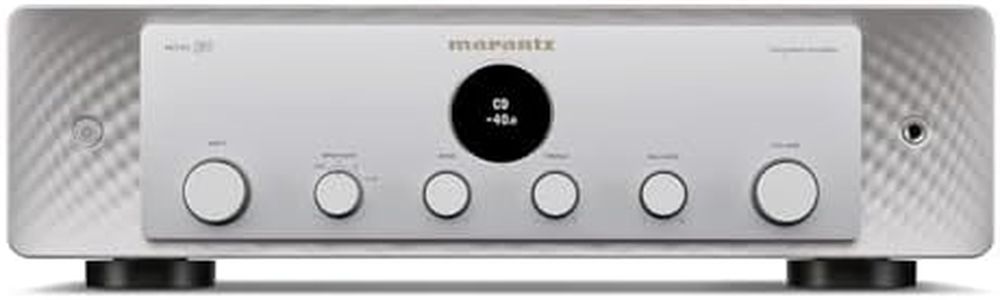
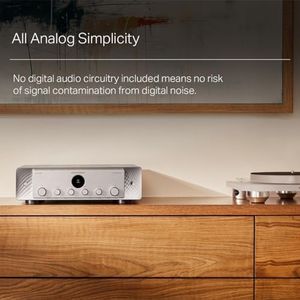
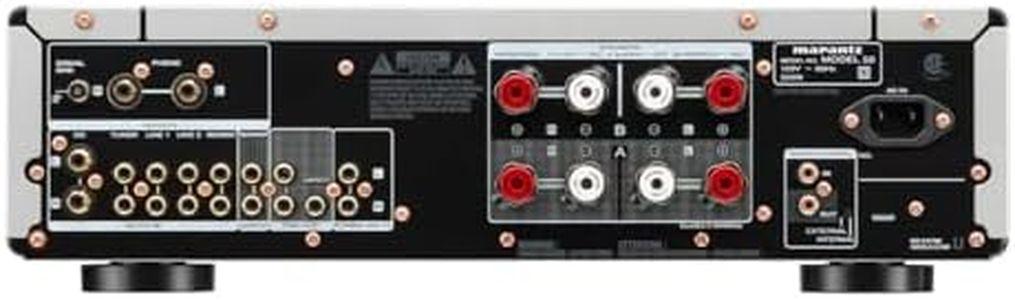
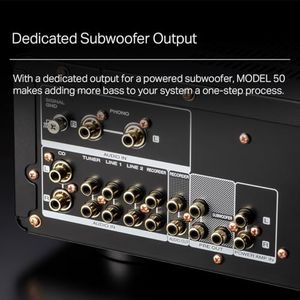
Marantz Model 50 Pure Analog (70 Watt x 2) Stereo Integrated Amplifier (Silver/Gold)

Power Output: 70 watts per channel
Connectivity Options: 6 sources, 2 speaker pairs, amps
Size and Design: 21x20x10 in, 35.5 lbs, silver
How do we rank products for you?

Our technology thoroughly searches through the online shopping world, reviewing hundreds of sites. We then process and analyze this information, updating in real-time to bring you the latest top-rated products. This way, you always get the best and most current options available.

headphones-stars

Buying Guide for the Best Stereo Amplifiers

Choosing the right stereo amplifier can significantly enhance your audio experience. A stereo amplifier is a device that amplifies audio signals from your source (like a CD player or turntable) and drives your speakers. When selecting a stereo amplifier, it's important to consider several key specifications to ensure it meets your needs and preferences. Understanding these specs will help you make an informed decision and find the best fit for your audio setup.
Power OutputPower output, measured in watts per channel, indicates how much power the amplifier can deliver to your speakers. This spec is crucial because it affects the volume and clarity of the sound. Generally, amplifiers with higher wattage can drive larger speakers and produce louder sound. If you have small speakers or listen at moderate volumes, an amplifier with lower wattage (20-50 watts per channel) may suffice. For larger rooms or more demanding speakers, look for amplifiers with higher wattage (100+ watts per channel). Consider your listening environment and speaker specifications to determine the appropriate power output.
ImpedanceImpedance, measured in ohms, refers to the resistance the amplifier encounters when driving your speakers. Most home audio speakers have an impedance of 4, 6, or 8 ohms. It's important to match the amplifier's impedance rating with your speakers to ensure optimal performance and avoid damage. Amplifiers typically support a range of impedances, so check the compatibility with your speakers. If you have speakers with lower impedance (4 ohms), ensure the amplifier can handle it without overheating or distortion. For higher impedance speakers (8 ohms), most amplifiers will work efficiently.
Total Harmonic Distortion (THD)Total Harmonic Distortion (THD) measures the purity of the amplified sound, indicating how much the signal is altered during amplification. Lower THD values mean cleaner and more accurate sound reproduction. THD is usually expressed as a percentage, with values below 1% considered good. For audiophiles seeking high-fidelity sound, look for amplifiers with THD below 0.1%. If you're less concerned about perfect sound quality, higher THD values (up to 1%) may be acceptable. Consider your preference for sound clarity when evaluating THD.
Signal-to-Noise Ratio (SNR)Signal-to-Noise Ratio (SNR) measures the level of the desired audio signal compared to background noise. A higher SNR indicates clearer sound with less noise interference. SNR is measured in decibels (dB), with values above 80 dB considered good. For critical listening and high-quality audio, aim for amplifiers with SNR above 100 dB. If you're using the amplifier for casual listening, values around 80-90 dB may be sufficient. Your choice should depend on how much background noise you can tolerate in your audio experience.
Connectivity OptionsConnectivity options refer to the types of inputs and outputs available on the amplifier. Common connections include RCA, optical, coaxial, and Bluetooth. These options determine how you can connect your audio sources and speakers. If you have multiple devices (like a turntable, CD player, and smartphone), ensure the amplifier has enough inputs to accommodate them. Bluetooth connectivity is useful for wireless streaming from mobile devices. Consider your current and future audio setup to choose an amplifier with the necessary connectivity options.
Size and DesignSize and design are important for fitting the amplifier into your space and matching your aesthetic preferences. Amplifiers come in various sizes, from compact models to larger units. Consider the available space in your audio setup and choose an amplifier that fits comfortably. Design elements like color, finish, and control layout can also impact your choice. If you prefer a minimalist look, opt for a sleek and simple design. For a more traditional setup, choose an amplifier with classic styling. Your personal taste and room decor should guide your decision.

FAQ