We Use CookiesWe use cookies to enhance the security, performance, functionality and for analytical and promotional activities. By continuing to browse this site you are agreeing to our privacy policy

10 Best Hydraulic Presses 2025 in the United States

#1

Winner

10.0 score

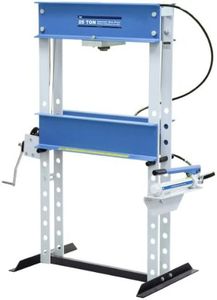
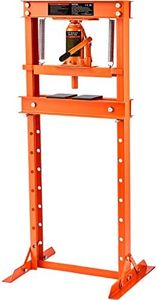
HPDMC 50 Ton H-Frame Hydraulic Shop Press with Floor Press Plates for Garage Shop

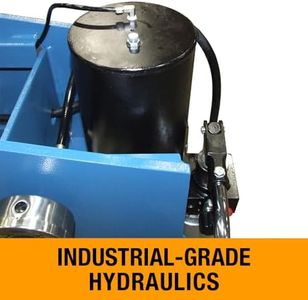
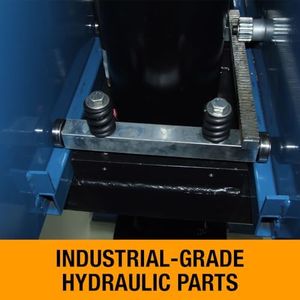
The HPDMC 50 Ton H-Frame Hydraulic Shop Press is a robust and versatile tool suitable for various automotive and industrial applications. With a substantial 50-ton capacity, it is powerful enough for tasks such as straightening, bending, pressing, and stamping.

#2
9.1 score

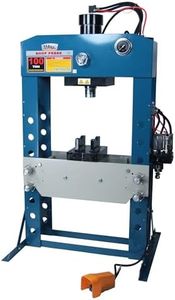
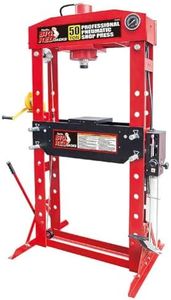
Baileigh 75-Ton Pneumatic Shop Press (HSP-75A)
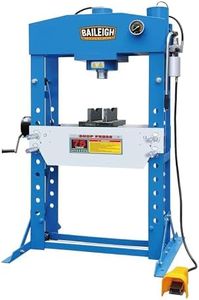
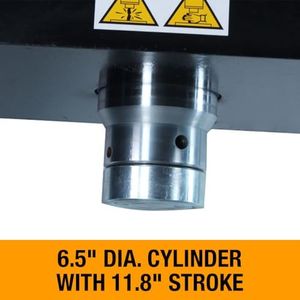
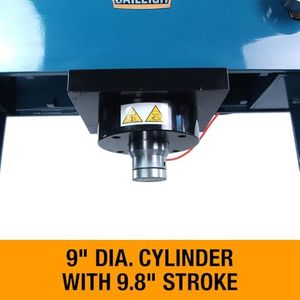
The Baileigh 75-Ton Pneumatic Shop Press (HSP-75A) is designed for heavy-duty applications, making it ideal for automotive shops, metalworking, and any projects requiring substantial force. Its 75-ton capacity provides significant power for bending, straightening, or compressing materials, which is a crucial strength in this category. The large 9-inch diameter cylinder and 9.8-inch stroke length allow for substantial working space and the ability to handle various tasks effectively.
#3
8.8 score

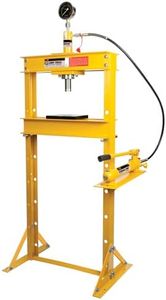
Dake F-10 Model Manual Utility Hydraulic Floor Press, 10 Ton Capacity, 24" Length x 28" Width x 60" Height

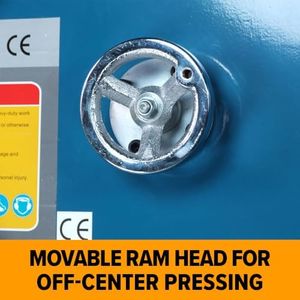
The Dake F-10 Manual Utility Hydraulic Floor Press is a solid choice for light to medium-duty pressing tasks, offering a 10-ton force capacity suitable for many workshop applications. The press features an adjustable-height table within its sturdy H-frame, allowing accommodation of larger or bulkier items comfortably. Its movable workhead is a practical addition, making it easier to handle off-center pressing jobs. The single-speed hydraulic hand pump provides straightforward manual control, with a release valve to smoothly return the ram after pressing. The included flat and reduced-step ram noses, along with two table plates, provide versatility for various pressing needs.

Rating
8.8
Tonnage
Stroke Length
Speed

Most important from
16 reviews

Tonnage
The hydraulic pressure builds slowly and smoothly, allowing very precise control during pressing tasks.
Stroke Length
The design accommodates very long workpieces up to 40 inches, making it suitable for larger or awkwardly sized items.
Speed
The ram is spring loaded, enabling it to snap back effortlessly when pressure is released, eliminating the need for manual resetting.
Control System
The pressure relief valve has a solid, easy-to-use handle that screws into the pump, avoiding fiddly tools during operation.

Top 10 Best Hydraulic Presses 2025 in the United States

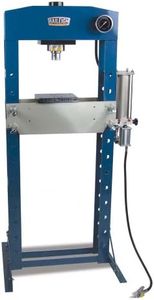
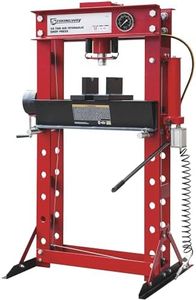
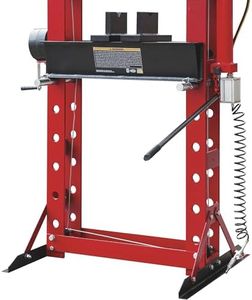
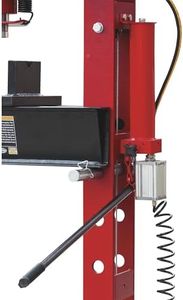
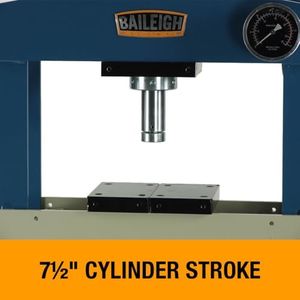
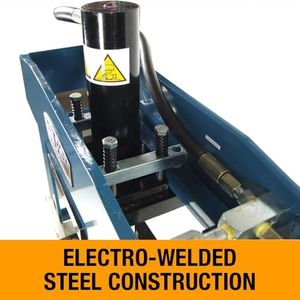
Baileigh 20-Ton Pneumatic Shop Press (HSP-20A)
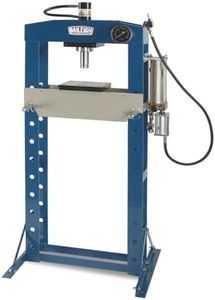
Tonnage: 20-ton
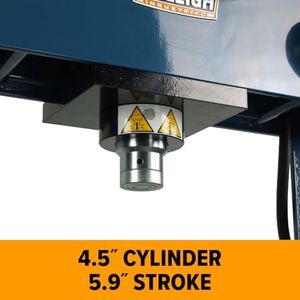
Stroke Length: 7.5-inch
Bed Size: 19.25-inch width
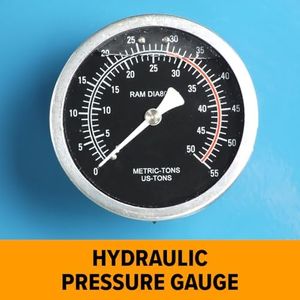
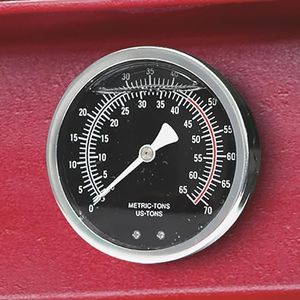
Control System: pressure regulator and gauge
How do we rank products for you?

Our technology thoroughly searches through the online shopping world, reviewing hundreds of sites. We then process and analyze this information, updating in real-time to bring you the latest top-rated products. This way, you always get the best and most current options available.

headphones-stars

Buying Guide for the Best Hydraulic Presses

Choosing the right hydraulic press can be a daunting task, but with the right knowledge, you can make an informed decision that best suits your needs. Hydraulic presses are used in various industries for tasks such as forming, molding, punching, and assembling. The key to selecting the right hydraulic press is understanding the specifications that matter most to your specific application. Here are some key specs to consider and how to navigate them.
TonnageTonnage refers to the maximum amount of force the hydraulic press can exert. This is crucial because it determines the press's ability to handle different materials and tasks. Tonnage is typically measured in tons. For light-duty tasks, such as small part assembly or light stamping, a press with lower tonnage (up to 20 tons) may suffice. For medium-duty tasks, like forming or punching thicker materials, a press with medium tonnage (20-100 tons) is more appropriate. Heavy-duty tasks, such as deep drawing or heavy forging, require high tonnage presses (over 100 tons). Assess the materials and tasks you will be working with to determine the appropriate tonnage for your needs.
Stroke LengthStroke length is the distance the ram (the part of the press that moves up and down) travels during a single cycle. This spec is important because it affects the press's ability to handle different sizes and shapes of materials. Shorter stroke lengths (up to 6 inches) are suitable for tasks requiring precision and control, such as small part assembly. Medium stroke lengths (6-12 inches) are ideal for general forming and punching tasks. Longer stroke lengths (over 12 inches) are necessary for deep drawing and forming large or complex parts. Consider the size and shape of the materials you will be working with to choose the right stroke length.
Daylight OpeningDaylight opening is the maximum distance between the press bed and the ram when the ram is fully retracted. This spec is important because it determines the maximum height of the workpiece that can be placed in the press. Smaller daylight openings (up to 12 inches) are suitable for compact tasks and smaller workpieces. Medium daylight openings (12-24 inches) are ideal for general tasks and medium-sized workpieces. Larger daylight openings (over 24 inches) are necessary for large or tall workpieces. Evaluate the height of the materials you will be working with to select the appropriate daylight opening.
Bed SizeBed size refers to the dimensions of the press bed, which is the surface on which the workpiece rests. This spec is important because it affects the size of the workpiece that can be accommodated. Smaller bed sizes (up to 12x12 inches) are suitable for small parts and precision tasks. Medium bed sizes (12x24 inches) are ideal for general tasks and medium-sized workpieces. Larger bed sizes (over 24x24 inches) are necessary for large or complex workpieces. Consider the dimensions of the materials you will be working with to choose the right bed size.
SpeedSpeed refers to the rate at which the ram moves during operation. This spec is important because it affects the efficiency and productivity of the press. Slower speeds (up to 1 inch per second) are suitable for tasks requiring precision and control, such as small part assembly. Medium speeds (1-3 inches per second) are ideal for general forming and punching tasks. Faster speeds (over 3 inches per second) are necessary for high-volume production and tasks requiring quick cycle times. Consider the nature of your tasks and the desired production rate to select the appropriate speed.
Control SystemThe control system refers to the mechanism used to operate and regulate the hydraulic press. This spec is important because it affects the ease of use and precision of the press. Manual control systems are suitable for simple tasks and small-scale operations. Semi-automatic control systems offer a balance between manual and automatic operation, making them ideal for medium-scale tasks. Fully automatic control systems provide the highest level of precision and efficiency, making them suitable for large-scale production and complex tasks. Consider the complexity of your tasks and the level of control required to choose the right control system.

FAQ