We Use CookiesWe use cookies to enhance the security, performance, functionality and for analytical and promotional activities. By continuing to browse this site you are agreeing to our privacy policy

10 Best Headphone Amplifiers 2026 in the United States
#1

Winner

10.0 score

FiiO K13 R2R Desktop DAC & Headphone Amp, High-Fidelity 24Bit R2R DAC, Powerful 2400mW Output, LDAC Bluetooth Streaming, Dual Power Supply, 10-Band PEQ, Balanced XLR & RCA Audio Output (Silver)

The FiiO K13 R2R is a solid choice if you're looking for a desktop headphone amplifier and DAC that delivers powerful, high-quality sound. It offers a strong power output of up to 2400mW, which means it can easily drive a wide range of headphones, including those with higher impedance, ensuring good volume and clarity. Its unique 24Bit R2R DAC technology aims to provide an analog-like sound with natural detail, appealing if you value musicality. You can switch between two listening modes: NOS for a pure, original sound or OS for clearer, more detailed audio, giving flexibility depending on your preference.

Rating
10.0
Chosen by1,196
Power Output

Most important from
102 reviews

Power Output
Its powerful output easily drives high-impedance headphones, providing excellent volume and clarity.
#2
9.7 score

TOPPING DX5 II Hi-Res DAC & Headphone Amp Combo – Dual ES9039Q2M, X-Hybrid Amp, 10-Band PEQ, LDAC Bluetooth 5.1, 4.4mm Balanced & 6.35mm Headphone Output, Preamp Mode, 12V Trigger (Silver)

The TOPPING DX5 II is a powerful headphone amplifier and DAC combo designed for audiophiles and serious music lovers. It uses advanced dual ESS9039Q2M DAC chips to deliver very clean, high-resolution sound up to 32-bit/768kHz and DSD512, ensuring detailed and distortion-free audio. The amp section features a fully balanced design pumping out up to 7600mW per channel—enough to easily drive high-impedance headphones or sensitive in-ear monitors without noise issues. It also offers excellent impedance matching and low distortion, contributing to clear, natural sound.

Rating
9.7
Power Output

Most important from
106 reviews

Power Output
Powerful enough to effortlessly drive high-impedance headphones and studio monitors without any noise or distortion.
#3
9.4 score

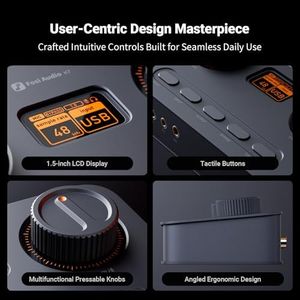
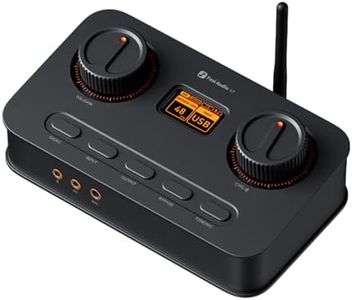
Fosi Audio K5 Pro Gaming DAC Headphone Amplifier Mini Hi-Fi Stereo Digital-to-Analog Audio Converter USB Type C/Optical/Coaxial to RCA/3.5MM AUX for PS5/PC/MAC/Computer

The Fosi Audio K5 Pro is a compact headphone amplifier and DAC designed primarily for gaming setups on devices like PS5, PC, and Mac. It delivers solid power, with enough output to drive headphones ranging from 16 to 300 ohms, meaning it can handle most headphones without issue. Its low total harmonic distortion (under 0.003%) and high signal-to-noise ratio (110dB) contribute to clean, clear sound that enhances audio detail during gaming or music playback.

Rating
9.4
Power Output
Impedance Matching
Signal-to-Noise Ratio (SNR)

Most important from
1444 reviews

Power Output
It drives headphones up to 300 ohms effortlessly, bringing headsets to life with detailed, well-separated music and plenty of volume.
Impedance Matching
It drives headphones up to 300 ohms effortlessly, bringing headsets to life with detailed, well-separated music and plenty of volume.
Signal-to-Noise Ratio (SNR)
Connecting via optical input eliminates USB interference caused by powerful GPUs, ensuring perfectly clean sound free from electrical noise.
Gain Control
The bass and treble controls allow instant, precise sound shaping, delivering clear highs and deep lows without overpowering the overall audio.
Portability
It is best suited for desktop use rather than portable setups, given it requires a power source and is designed for gaming and casual listening environments.

Top 10 Best Headphone Amplifiers 2026 in the United States

iFi xDSD Gryphon - Ultra-Res Portable Balanced DAC & Headphone Amplifier - INPUTS: Bluetooth 5.1 / USB-C/S-PDIF / 3.5mm SE / 4.4mm Bal

Power Output: 1000mW
Impedance Matching: iEmatch, auto-gain technology
Total Harmonic Distortion (THD): ultra-low
Signal-to-Noise Ratio (SNR): optimized
Gain Control: robust, adaptive
Portability: compact, lightweight, 7.6 ounces

CHORD ELECTRONICS Mojo 2

Power Output: solid
Impedance Matching: well-managed
Total Harmonic Distortion (THD): low
Signal-to-Noise Ratio (SNR): high
Gain Control: available
Portability: compact, lightweight (10.8 ounces)
How do we rank products for you?

Our technology thoroughly searches through the online shopping world, reviewing hundreds of sites. We then process and analyze this information, updating in real-time to bring you the latest top-rated products. This way, you always get the best and most current options available.

headphones-stars

Buying Guide for the Best Headphone Amplifiers

Choosing the right headphone amplifier can significantly enhance your listening experience by providing better sound quality and more power to drive your headphones. When selecting a headphone amplifier, it's important to consider several key specifications to ensure you get the best fit for your needs. Understanding these specs will help you make an informed decision and find an amplifier that complements your headphones and listening preferences.
Power OutputPower output refers to the amount of power the amplifier can deliver to your headphones. This is important because different headphones have varying power requirements. Low power output (under 100mW) is suitable for efficient headphones with low impedance (under 32 ohms). Medium power output (100mW to 500mW) is ideal for headphones with moderate impedance (32 to 100 ohms). High power output (over 500mW) is necessary for high-impedance headphones (over 100 ohms) that require more power to perform optimally. Choose an amplifier with a power output that matches the impedance of your headphones to ensure they are driven properly and deliver the best sound quality.
Impedance MatchingImpedance matching is the process of ensuring that the output impedance of the amplifier is compatible with the impedance of your headphones. This is important because a mismatch can result in poor sound quality or even damage to your headphones. Amplifiers with low output impedance (under 2 ohms) are generally suitable for most headphones, providing a clean and accurate sound. If you have high-impedance headphones, look for an amplifier with an output impedance that is at least one-eighth of the headphone impedance. This will help maintain sound quality and prevent distortion.
Total Harmonic Distortion (THD)Total Harmonic Distortion (THD) measures the amount of distortion an amplifier introduces to the audio signal. Lower THD values indicate cleaner and more accurate sound reproduction. THD is usually expressed as a percentage, with values under 0.1% considered excellent for high-fidelity audio. If you are an audiophile or someone who values pristine sound quality, aim for an amplifier with a THD of 0.05% or lower. For casual listeners, a THD of up to 0.5% may still provide satisfactory sound quality.
Signal-to-Noise Ratio (SNR)Signal-to-Noise Ratio (SNR) measures the level of the desired audio signal compared to the level of background noise. A higher SNR indicates a cleaner and clearer sound, as there is less background noise interfering with the audio. SNR is typically measured in decibels (dB), with values above 90dB considered good for most listening situations. For critical listening or professional use, look for an amplifier with an SNR of 100dB or higher to ensure the best possible sound quality.
Gain ControlGain control allows you to adjust the amplification level to match the sensitivity of your headphones. This is important because it helps you achieve the desired volume without introducing distortion or noise. Amplifiers with adjustable gain settings (low, medium, high) provide more flexibility and can accommodate a wider range of headphones. If you have multiple pairs of headphones with varying sensitivities, an amplifier with adjustable gain control will allow you to fine-tune the amplification for each pair, ensuring optimal performance.
PortabilityPortability refers to the ease with which you can carry and use the amplifier on the go. This is important if you plan to use your amplifier with a portable audio player or while traveling. Portable headphone amplifiers are typically smaller, battery-powered, and lightweight, making them easy to carry. Desktop amplifiers, on the other hand, are larger and designed for stationary use, often providing more power and better sound quality. If you need an amplifier for use at home or in a studio, a desktop model may be more suitable. For on-the-go use, look for a compact and portable amplifier.

FAQ