We Use CookiesWe use cookies to enhance the security, performance, functionality and for analytical and promotional activities. By continuing to browse this site you are agreeing to our privacy policy

6 Best Plate Subwoofer Amplifiers 2026 in the United States

#1

Winner

10.0 score

Dayton Audio SPA300-D 300 Watt Class-D Subwoofer Plate Amplifier
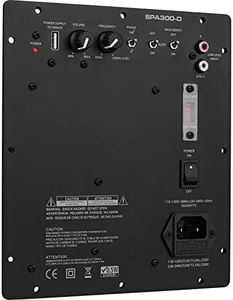
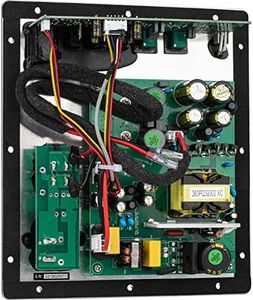
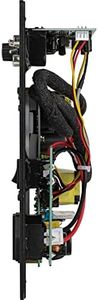
The Dayton Audio SPA300-D is a 300 Watt Class-D subwoofer plate amplifier designed to boost the performance of your subwoofer. Its powerful 300 Watt output gives ample power to deliver deep, rich bass, which is great for home audio systems. The Class-D design also ensures efficient power usage, making it more energy-efficient compared to other types of amplifiers.

Rating
10.0
Chosen by1,496
Power Output (Wattage)
Built-in Equalizer (EQ)

Most important from
117 reviews

Power Output (Wattage)
Despite being rated for 4-ohms, it drives 2-ohm loads with ease, delivering impressive power and output.
Built-in Equalizer (EQ)
All the necessary knobs for tuning and integrating into an audio system are provided, allowing for seamless calibration.
#2
10.0 score

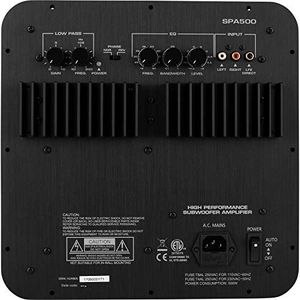
Dayton Audio SPA500 500W Subwoofer Plate Amplifier
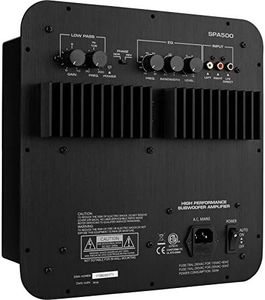
The Dayton Audio SPA500 500W Subwoofer Plate Amplifier is designed to deliver high power and clean, controlled output. With a power output of 500 watts, it is capable of driving demanding subwoofers effectively. The Class-AB output stage ensures that the sound remains clear and precise, while the patented tracking downconverter power supply helps maintain high efficiency.

Rating
10.0
Power Output (Wattage)

Most important from
42 reviews

Power Output (Wattage)
Powers a 15-inch subwoofer perfectly, making it a much better option than some original equipment amps.
#3
8.2 score

Dayton Audio SPA250 250 Watt Subwoofer Plate Amplifier

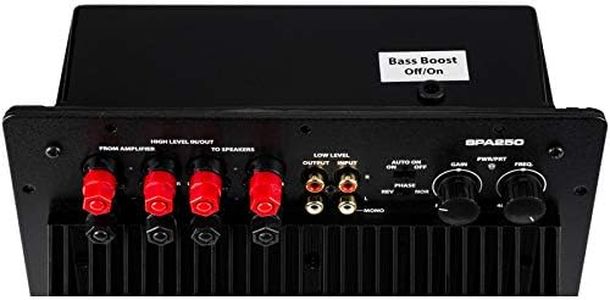
The Dayton Audio SPA250 is a versatile and powerful subwoofer plate amplifier suitable for various audio setups. It boasts a solid power output, providing 156 watts RMS into 8 ohms and 252 watts RMS into 4 ohms, ensuring substantial low-end reinforcement for your sound system. The amplifier's signal-to-noise ratio of 90 dB means it effectively minimizes background noise, delivering clear and crisp audio playback. With a variable crossover frequency and switchable phase controls, the SPA250 allows for fine-tuned integration into your specific room acoustics, which can be quite beneficial for achieving the best sound quality. Additionally, the switchable 6 dB bass boost at 35 Hz offers an extra punch for those who prefer a deeper bass experience.

Rating
8.2
Power Output (Wattage)
Built-in Equalizer (EQ)

Most important from
236 reviews

Power Output (Wattage)
The amplifier delivers crisp, clean power, significantly enhancing the sound quality compared to the original amp.
Built-in Equalizer (EQ)
The +6dB bass boost at 35Hz adds a noticeable punch to the low-end response, enriching the overall audio experience.

Top 6 Best Plate Subwoofer Amplifiers 2026 in the United States
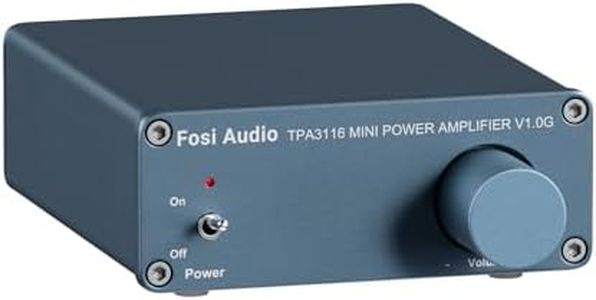
#1

Winner

10.0  score

Dayton Audio SPA300-D 300 Watt Class-D Subwoofer Plate Amplifier
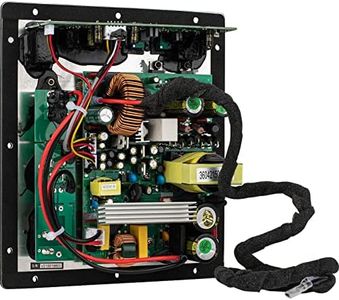
Power Output (Wattage): 300 Watt
Frequency Response: wide range
Signal-to-Noise Ratio (SNR): high
Crossover Frequency: smooth transition
Input and Output Options: versatile
Built-in Equalizer (EQ): sound customization

Chosen by 1496 this week

Dayton Audio SPA250 250 Watt Subwoofer Plate Amplifier
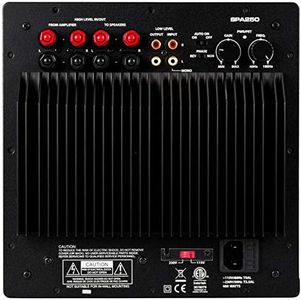
Power Output (Wattage): 156W RMS into 8 ohms, 252W RMS
Signal-to-Noise Ratio (SNR): 90 dB
Crossover Frequency: Variable
Input and Output Options: Low-level, high-level, LFE inputs

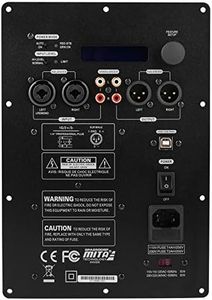
Dayton Audio SPA250DSP 250W Subwoofer Plate Amplifier with DSP
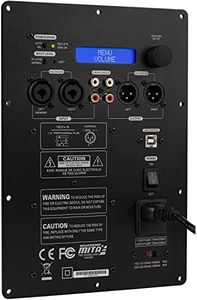
Power Output (Wattage): 250 Watts
Input and Output Options: balanced and unbalanced inputs/outputs
Built-in Equalizer (EQ): 7 PEQ bands

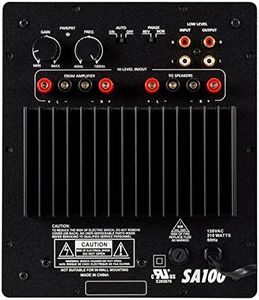
Dayton Audio SA100 100W Subwoofer Plate Amplifier
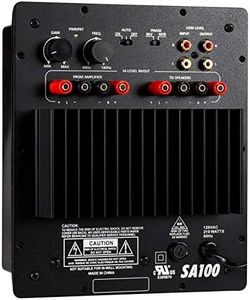
Power Output (Wattage): 100 watts at 4 ohms
Crossover Frequency: adjustable low pass
Input and Output Options: high and low level inputs
Built-in Equalizer (EQ): lacks built-in equalizer
How do we rank products for you?

Our technology thoroughly searches through the online shopping world, reviewing hundreds of sites. We then process and analyze this information, updating in real-time to bring you the latest top-rated products. This way, you always get the best and most current options available.

headphones-stars

Buying Guide for the Best Plate Subwoofer Amplifiers

When choosing a plate subwoofer amplifier, it's important to understand the key specifications that will impact the performance and compatibility of the amplifier with your subwoofer. A plate subwoofer amplifier is designed to be mounted directly onto the subwoofer enclosure, providing a compact and efficient solution for powering your subwoofer. By understanding the key specs, you can ensure that you select an amplifier that meets your needs and enhances your audio experience.
Power Output (Wattage)Power output, measured in watts, indicates how much power the amplifier can deliver to the subwoofer. This is crucial because it determines the volume and clarity of the bass produced. Generally, amplifiers with higher wattage can drive subwoofers to produce louder and more impactful bass. For casual listening or smaller rooms, an amplifier with 100-300 watts may suffice. For larger rooms or more intense bass, consider amplifiers with 300-1000 watts or more. Match the amplifier's power output to the subwoofer's power handling capacity to avoid damage and ensure optimal performance.
Frequency ResponseFrequency response refers to the range of frequencies the amplifier can reproduce, typically measured in Hertz (Hz). This is important because it affects the depth and quality of the bass. A good plate subwoofer amplifier should have a frequency response that extends down to at least 20 Hz, which is the lower limit of human hearing. For a richer and more immersive bass experience, look for amplifiers with a frequency response range of 20 Hz to 200 Hz. Choose an amplifier with a frequency response that matches or exceeds the capabilities of your subwoofer for the best sound quality.
Signal-to-Noise Ratio (SNR)The signal-to-noise ratio (SNR) measures the level of the desired signal compared to the level of background noise, expressed in decibels (dB). A higher SNR indicates a cleaner and clearer sound with less background noise. This is important for achieving high-quality audio, especially at higher volumes. An SNR of 90 dB or higher is generally considered good for subwoofer amplifiers. If you are an audiophile or use the system in a quiet environment, aim for an amplifier with an SNR of 100 dB or higher to ensure minimal noise interference.
Crossover FrequencyThe crossover frequency is the point at which the amplifier divides the audio signal between the subwoofer and other speakers. This is important for ensuring that the subwoofer only handles low-frequency sounds, which it is designed to reproduce. Most plate subwoofer amplifiers have adjustable crossover frequencies, typically ranging from 40 Hz to 200 Hz. For a balanced sound, set the crossover frequency to match the lower limit of your main speakers' frequency response. This ensures a smooth transition between the subwoofer and the other speakers, avoiding gaps or overlaps in the audio spectrum.
Input and Output OptionsInput and output options determine how the amplifier connects to your audio system. Common inputs include RCA, XLR, and speaker-level inputs, while outputs may include speaker terminals and line-level outputs. This is important for compatibility with your existing equipment. Ensure the amplifier has the necessary inputs and outputs to connect to your receiver, preamp, or other audio sources. If you plan to integrate the subwoofer into a home theater system, look for an amplifier with LFE (Low-Frequency Effects) input for direct connection to the AV receiver's subwoofer output.
Built-in Equalizer (EQ)A built-in equalizer (EQ) allows you to adjust the sound characteristics of the subwoofer, such as bass boost or cut. This is important for tailoring the sound to your preferences and the acoustics of your room. Some amplifiers offer simple bass and treble controls, while others provide more advanced parametric EQ settings. If you prefer a hands-on approach to fine-tuning your audio, look for an amplifier with a comprehensive EQ. For those who prefer a more straightforward setup, a basic EQ with preset options may be sufficient.

FAQ